

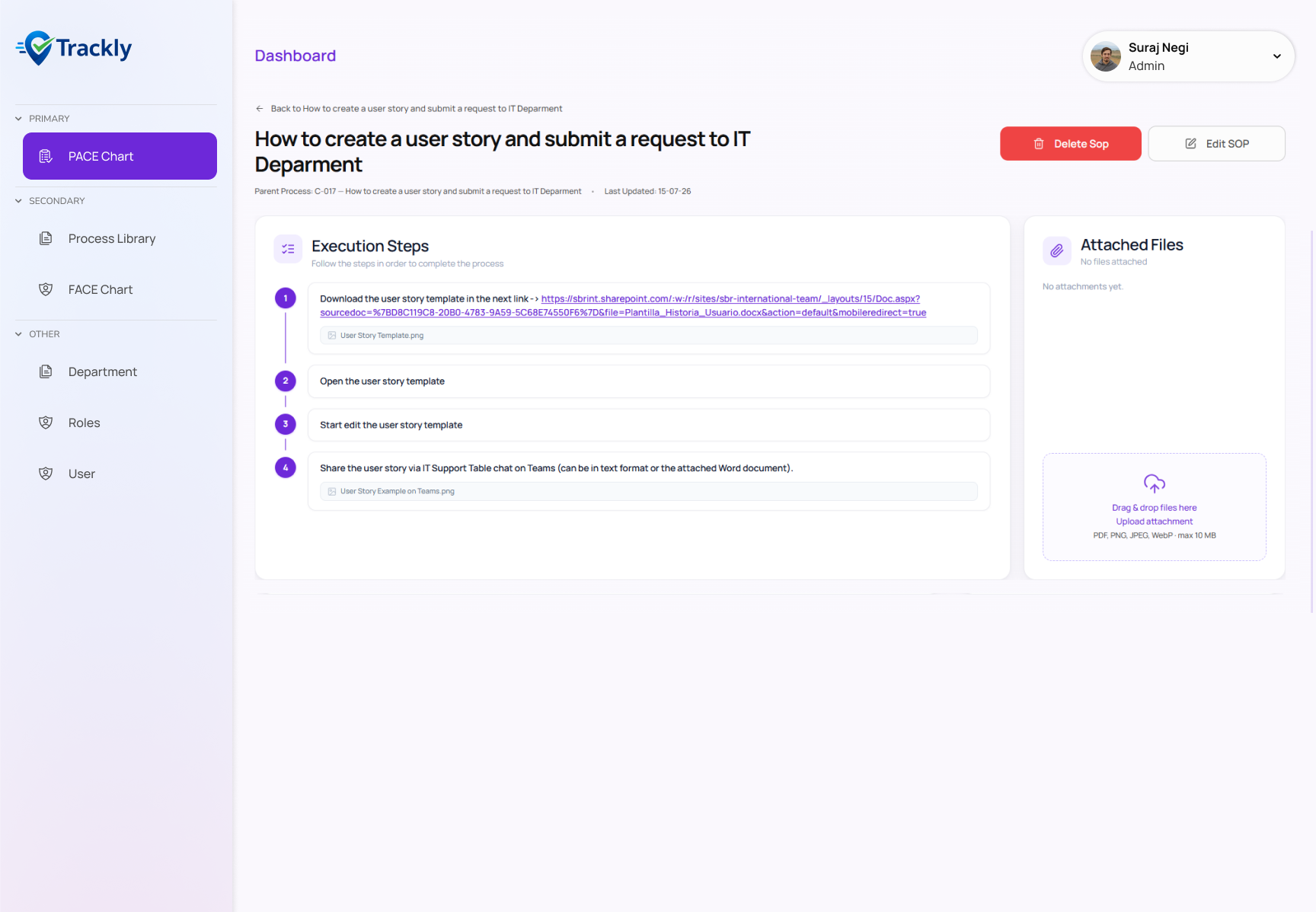
Standard Operating Procedures, commonly known as SOPs, are an essential part of effective business process management. They help organizations document how important tasks should be completed, define responsibilities, and maintain consistency across teams. However, simply creating SOP documents does not guarantee that employees will use them. Many businesses spend considerable time documenting processes, but their SOPs eventually become outdated, difficult to understand, or disconnected from everyday workflows. The real objective should be to create SOPs that employees can easily understand, access, and follow.
What Is an SOP?
A Standard Operating Procedure is a documented set of instructions that explains how to complete a specific business process or task.
For example, a company may have SOPs for:
- Employee onboarding
- Customer support
- Sales follow-ups
- Quality control
- Product delivery
- Invoice processing
- IT support
- Procurement
- Marketing activities
A well-designed SOP removes unnecessary confusion by providing employees with a clear and repeatable process.
Why Do Businesses Need Effective SOPs?
As organizations grow, relying on individual knowledge becomes risky. Employees may have different ways of completing the same task, which can lead to inconsistent results. Effective SOP management can help businesses:
- Standardize recurring processes
- Improve employee accountability
- Reduce operational errors
- Speed up employee onboarding
- Preserve organizational knowledge
- Improve team productivity
- Reduce dependency on individual employees
- Support business scalability
SOPs are particularly valuable for growing organizations because they turn informal knowledge into structured business processes.
Start With the Right Processes
One of the biggest mistakes businesses make is trying to document everything at once. Instead, begin with processes that have the greatest impact on business performance. Ask questions such as:
- Which tasks are performed frequently?
- Which processes cause repeated mistakes?
- Where do employees need the most guidance?
- Which activities depend heavily on one employee?
- Which processes directly affect customers?
For example, if customer onboarding is frequently delayed, creating a detailed SOP for that process may deliver more value than documenting a rarely used internal task. Prioritizing important workflows makes business process management more practical and effective.
Make SOPs Simple and Actionable
An SOP should help employees complete a task—not make the task more complicated. Avoid unnecessary technical language and long explanations when a simple instruction will work. A practical SOP should clearly explain:
- What needs to be done
- Who is responsible
- When the task should be completed
- What tools or information are required
- What steps need to be followed
- What the expected result should be
Using headings, bullet points, checklists, and numbered steps can make SOPs easier to scan and understand.
Clearly Define Process Ownership
An SOP without an owner can quickly become outdated. Every important business process should have a clearly identified process owner. This person may be responsible for reviewing the procedure, coordinating updates, answering questions, and identifying improvement opportunities.
Process ownership also improves accountability. Employees know who is responsible for maintaining the process instead of assuming that someone else will manage it. This becomes especially important when multiple departments are involved in the same workflow.
Keep SOPs Easy to Access
Even the best SOP is ineffective if employees cannot find it when they need it. Businesses often store procedures across emails, shared folders, spreadsheets, messaging applications, and individual documents. This can create confusion about which version is current.
Centralizing operational documentation gives employees a consistent place to find important processes and information. Modern process management software can help organizations organize SOPs, workflows, responsibilities, and operational knowledge in a more structured environment.
Connect SOPs With Actual Workflows
An SOP should not exist as a standalone document that employees read once and forget. The most useful SOPs are connected to the actual processes employees perform every day.
For example, instead of simply storing a customer onboarding document in a folder, an organization can connect the procedure with the responsible team, required tasks, supporting information, and process ownership. This creates a more practical operating system where employees can understand not only what they need to do but also how their responsibilities connect with the wider process.
Review and Update SOPs Regularly
Business processes are not permanent. New software, organizational changes, customer requirements, regulations, and internal policies can change how work should be completed. For this reason, SOPs should be reviewed regularly. A useful review process can ask:
- Is the current procedure still accurate?
- Are any steps unnecessary?
- Has responsibility changed?
- Are employees facing recurring problems?
- Can technology automate part of the process?
- Is the documentation easy to understand?
Regular reviews prevent SOPs from becoming outdated documents that employees stop trusting.
Use Technology to Manage Operational Knowledge
As the number of processes increases, managing SOPs manually can become difficult. This is where modern operations and process management platforms can provide additional value.
Roveta, for example, focuses on Process Relationship Management (PRM), helping organizations connect processes with people, responsibilities, knowledge, and operational relationships. Instead of treating every SOP as an isolated document, businesses can take a more connected approach to managing their operational environment. This can make it easier for teams to understand process ownership, access relevant knowledge, and identify areas where processes can be improved.
Common SOP Mistakes to Avoid
Creating SOPs is only the first step. Businesses should also avoid several common mistakes.
Too much detail: An SOP should provide enough information to complete a task without overwhelming the employee.
No ownership: Without a responsible owner, procedures may become outdated.
Poor accessibility: Employees should be able to find relevant SOPs quickly.
Outdated information: Old procedures can create more problems than having no documentation.
Lack of employee feedback: The people who actually perform the process can often identify practical improvements that managers may overlook.
Conclusion
Effective SOPs are more than documents stored in a company folder. They are an important part of a scalable business operations management system. By prioritizing critical processes, keeping instructions simple, assigning clear ownership, centralizing operational knowledge, connecting SOPs with workflows, and reviewing them regularly, businesses can create processes that employees are more likely to follow.
For growing organizations, the combination of structured SOP management and modern process management technology can help turn operational knowledge into a reliable, scalable business system. The goal is not simply to document how work is done. The goal is to create an operating environment where people, processes, and knowledge work together efficiently.
Ready to Make Your Business Processes Easier to Manage?
Effective SOPs are only the beginning of building a scalable operations system. If your teams are struggling with scattered documentation, unclear process ownership, or inconsistent workflows, it may be time to bring your processes into one connected system.
Roveta helps businesses connect processes, people, responsibilities, and operational knowledge through a modern Process Relationship Management approach. See how Roveta can help your organization improve process visibility, accountability, and operational efficiency.